


How AXLE LMS® Standardized Employee Training for a Financial Services Firm



Table of Content
Overview
A growing financial services firm, which was set up in 2010, offers investment management, wealth strategy, corporate finance, insurance services, equities and mutual funds in India.
The company is a core employer for cross-handling financial products, compliance requirements to and operational processes, the firm needed to ensure that everyone had the right knowledge and enough training for their respective roles.
However, as the business continued to grow, its existing training approach struggled to keep pace with changing learning requirements.
The Challenge
With the growth of the firm, there arose the need for more advanced training that could support them in handling more complex tasks and compliance requirements.
Providing consistent training, tracking learner progress and monitoring compliance was a challenge without a centralised learning management system. Manual processes hampered reporting and visibility regarding learner performance.
Employees from various departments required both refreshers about financial products, changing regulatory requirements and other organisational processes, however, the training process remained manual, which resulted in a lack of consistency in training among the staff.
Yet, it was obvious that the firm needed to follow a more organised approach to their learning management.
The Solution
In order to overcome all the challenges mentioned above, Novac's AXLE LMS was implemented as a unified digital learning platform. It streamlined the learning process, made it easier for administrators to manage training and gave employees a simple yet an intuitive way to learn.
- Offer structured learning programs on insurance, equities, mutual funds, investment management and corporate finance.
- Provide compliance-based training modules to ensure regulatory requirements are met and documented properly.
- Assess employees' knowledge and performance using quizzes and assessments.
- Automate progress tracking, reporting and skill assessment to enhance training efficiency.
- Generate consolidated reports across video learning, quizzes, assessments and course completion.
- Always keep employees updated on the most recent financial knowledge and compliance regulations.
- Improve learner engagement gamification elements such as points, leaderboards, badges and rewards.
- Ensure accurate and reliable education through automated scoring and performance dashboards.
Rather than dealing with many different processes manually, the entire learning process has been managed through a single platform.
The Business Impact
Uniform financial products knowledge
As courses were provided with consistent information on insurance, equity, mutual funds, investment management, and corporate finance, in this way, there was a uniform knowledge base of financial products so employees are all from the same page from the manager to the member of their position.
Enhanced compliance preparedness
As courses were provided with consistent information on insurance, equity, mutual funds, investment management, and corporate finance, in this way, there was a uniform knowledge base of financial products so employees are all from the same page from the manager to the member of their position. By automatically tracking progress also having compliance-oriented to each employee, regulatory checks are more streamlined so the firm can demonstrate compliance with ease.
Increased employee performance visibility
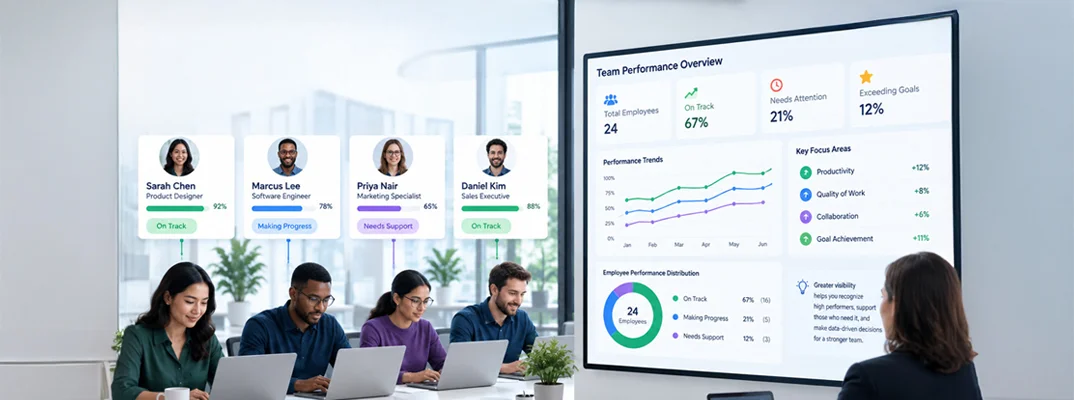
Managers were able to assess learning gaps among employees using quizzes, assessments and performance metrics. In this way, managers were able to identify learning areas accurately and provide learners with relevant training rather than assuming what they miss.
Greater training efficiency
Automation delivery of courses, testing, tracking and reporting helped cut down on excessive administrative activities, freeing up managers and HR to focus on more strategic work.
More effective reporting and analytics
Training statistics were collected for videos, quizzes, tests and course completion status in one centralised system, providing a complete picture of the training program for management.
Unified learning progress
A unified learning process was created within the firm that applies across financial products, compliance and professional skills training. Each employee has a consistent path of learning.
The Way Forward
By implementing AXLE LMS, the firm was able to move away from manual learning processes to a digital learning platform. This made it easy easier to manage and gave administrators better visibility into employee learning activities.
With this new training methodology in place, the firm is well prepared to address continuous learning requirements within the financial services industry.
Stay Ahead with Industry Insights
Get the latest updates on digital transformation, platforms, and industry trends.